
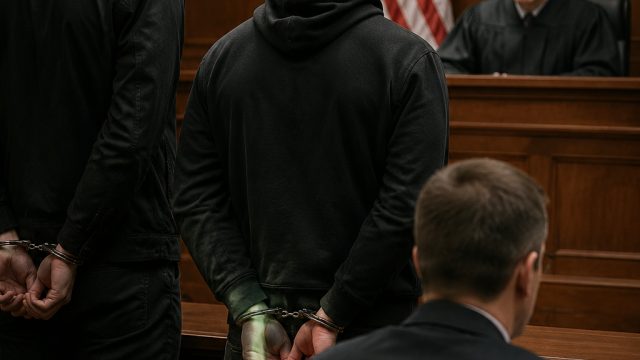
In a landmark decision that is sending ripples through the political and social landscapes of the United States, a group of alleged Antifa members in Texas has been handed lengthy prison sentences for their involvement in protests against the Immigration and Customs Enforcement (ICE) agency. These sentences, some reaching up to 100 years, have ignited a vigorous discussion about the boundaries of free speech, protest rights, and the implications of labeling dissent as terrorism.
The Context of the Sentences
The charges stem from a violent incident near an ICE facility in Alvarado, Texas, where the protesters were accused of engaging in acts that authorities have classified as terrorism. The prosecution framed their actions as a direct assault on law enforcement, while defense attorneys argued that their clients were exercising their constitutional right to protest.
Understanding the Charges
- Assault on law enforcement: The charges included physical confrontations with officers.
- Property damage: Allegations of vandalism were also part of the indictment against the group.
- Terrorism classification: The prosecution labeled the actions as terrorism, raising significant legal questions.
What This Means for Free Speech
Proponents of civil liberties are alarmed by the severity of the sentences. They argue that labeling protests as acts of terrorism undermines the foundational principles of free speech and assembly. The fear is that such classifications can set a dangerous precedent, where dissent is met with extreme punitive measures.
Public Response and Reactions
Public reaction has been polarized, with supporters of the protesters advocating for their release, citing their actions as a necessary response to what they view as unjust government policies. Conversely, many within law enforcement and more conservative circles express the need for strict penalties to deter future violent protests.
The Broader Implications
As the debate unfolds, the implications of these sentences reach beyond the specific case. Observers are concerned that the legal precedent set in Texas may influence how protests are handled nationwide. The fear is that hostile environments could deter individuals from speaking out against perceived injustices, effectively chilling free speech.
Potential Legal Ramifications
- Increased scrutiny of protest activities: Future protests may be subject to heightened legal repercussions.
- Potential for civil rights challenges: Legal challenges could arise questioning the constitutionality of these sentences.
- Impact on activists: Activists may face greater risks when organizing protests.
A Call for Dialogue
In light of these events, it is essential to foster dialogue about the role of protests in a democratic society. This situation presents an opportunity for lawmakers, civil rights advocates, and citizens to come together to discuss how to balance public safety with the right to protest.
Encouraging Civil Discourse
Rather than allowing divisive rhetoric to dominate the conversation, stakeholders should prioritize constructive discourse. This includes:
- Promoting understanding among diverse viewpoints.
- Encouraging peaceful protests as a vital component of democracy.
- Establishing clear legal definitions to differentiate between lawful protest and unlawful acts.
Conclusion
The sentencing of the alleged Antifa members in Texas marks a significant moment in the ongoing struggle for civil rights and free speech in America. As discussions continue, it is crucial that all voices are heard, ensuring that the right to protest remains a cornerstone of democratic expression. The actions taken today will undoubtedly influence future generations' ability to speak out against injustice, making it imperative for society to reflect on the values it upholds.