
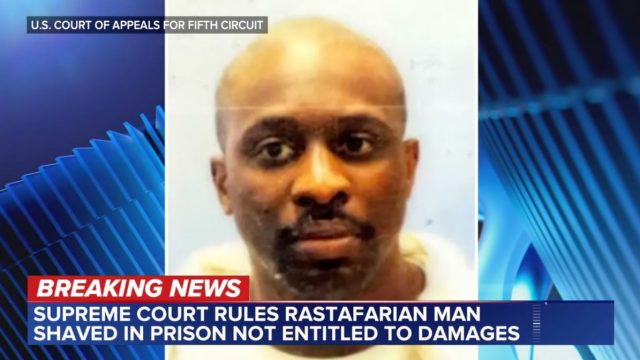
The recent ruling by the Supreme Court concerning the rights of inmates to practice their faiths has sparked widespread debate. In a case involving a Rastafarian prisoner, the Court ruled against his ability to sue prison guards who forcibly cut his dreadlocks, a significant aspect of his religious identity. This decision not only affects the individual involved but also sets a concerning precedent for the religious freedoms of all inmates across the United States.
The Case: What Happened?
Damon Landor, a Rastafarian inmate, presented evidence of his religious beliefs and the laws that protect them to the prison authorities. Despite this, prison guards proceeded to shave his head, ignoring both his pleas and the legal protections he was entitled to. Landor's case reached the Supreme Court, where justices ultimately sided with the prison system, raising unsettling questions about the extent of religious freedoms within correctional facilities.
The Legal Landscape
Religious freedom is a fundamental right enshrined in the U.S. Constitution; however, the application of this right within prison contexts has often been a contentious issue. The Supreme Court's ruling has brought to light several key considerations:
- Religious Expression: Inmates often face numerous barriers when attempting to express their religious identity, leading to conflicts with prison policies.
- Legal Precedents: This ruling may influence future cases regarding the treatment of inmates and their religious practices.
- Prison Policies: The decision may embolden prison authorities to enforce stricter regulations that infringe upon inmates' rights to religious expression.
Implications for Religious Rights
The impact of this ruling extends beyond individual cases, reverberating through the broader discourse on religious rights in America. The Supreme Court's decision could lead to an erosion of protections for inmates, particularly those belonging to minority faiths. This raises critical questions about how religious beliefs are accommodated in environments where security is prioritized over personal freedoms.
Why This Matters Now
As society grapples with issues surrounding civil liberties, the timing of this ruling coincides with heightened awareness around the rights of marginalized communities, including those in incarceration. The ability for inmates to possess and maintain their religious identities is crucial for their mental and emotional well-being.
Moreover, as various religious practices continue to evolve and expand, the intersection of faith and incarceration presents a landscape fraught with challenges. The implications of this ruling could discourage inmates from practicing their faith, fearing repercussions from prison authorities.
Public Response and Future Outlook
The Supreme Court's ruling has been met with significant backlash from civil rights advocates and religious organizations. Many argue that the decision represents a regression in protecting minority rights within the legal system. Several advocacy groups are mobilizing to raise awareness about this issue, emphasizing the need for reform in the treatment of religious practices in prisons.
Calls for Reform
In response to the ruling, several key actions are being proposed:
- Legislation: Advocates are urging lawmakers to introduce bills that reinforce the rights of inmates to practice their faith without fear of retribution.
- Awareness Campaigns: Organizations are launching campaigns to educate the public about the importance of religious freedoms for all individuals, even in correctional settings.
- Legal Challenges: Some groups are considering appealing to lower courts based on the argument that the Supreme Court's ruling does not reflect the current societal values regarding religious freedoms.
Conclusion: What Lies Ahead?
The ruling by the Supreme Court signifies a pivotal moment in the ongoing battle for religious freedoms, particularly for those who find themselves incarcerated. As public discourse evolves, it becomes imperative for all stakeholders—advocates, lawmakers, and the general public—to engage in meaningful discussions about the importance of protecting the rights of individuals to express their faith. The implications of this decision will likely unfold in the years to come, shaping the landscape of religious rights within our correctional systems.